We use cookies to improve your experience on our site and to show you relevant advertising. By clicking "Accept All", you consent to the use of ALL cookies. You can also manage your preferences or learn more about our privacy practices.
AI won't rescue your lack of roadmap.
by Drew Robbins
3 min read
Choose What Matters
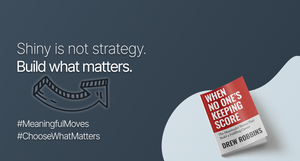
Teams rush to add AI without thinking about real value. Focus on user outcomes with precise questions before building anything.
With the market moving so fast, teams rush to add AI without thinking about the real value or the outcome. Stakeholders applaud slick demos, but the core workflow is no faster, clearer, or more reliable for users. They chase the shiny thing, users get little, and after launch we can't point to any real improvement.
To get impact from AI, leaders need a clear understanding of the outcome they are going for, then anchor the team in user value with a few precise questions. What problem are we solving, who is the primary user, and what is the smallest experiment that proves value they can feel. Confidence grows when design and research start earlier, experiments get smaller, and success is defined the way users would describe it such as time saved, higher first try success, or fewer steps.
More than ever, we need to make sure there's a meaningful problem to solve and that AI makes sense as a part of the solution.
— Jeff Gothelf, Author and Speaker
What is the smallest user centered experiment you will run before writing a line of AI code?
Try This
Write one sentence for the problem, name one primary user, define one success signal they feel such as time to complete or first try success.
Notice What Happens
Scope shrinks, debates shift from can we build it to should we build it, and learning speeds up.
Share or Reflect
Post your problem statement and success signal to your team for quick feedback before you prototype.
Keep Going
Replace feature reviews with outcome reviews and automate busywork so attention stays on discovery and design.
If this resonates, share with your network to help more teams build what matters.