We use cookies to improve your experience on our site and to show you relevant advertising. By clicking "Accept All", you consent to the use of ALL cookies. You can also manage your preferences or learn more about our privacy practices.
A copilot is helpful only if you stay in the loop.
by Drew Robbins
2 min read
Be Present
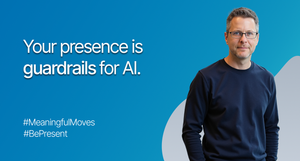
Staying present with AI keeps judgment engaged. Treat each answer as a draft, add guardrails, and verify assumptions before you ship.
Staying present is the difference between collaborating with AI and outsourcing your judgment. AI makes it easier to move fast, and that is exactly when attention starts to drift. This applies whether you are writing code, authoring documents, analyzing data, or making decisions with a copilot at your side. When the draft looks polished, it is tempting to accept it as is, paste it into a plan, and move on. A small hallucination can travel from a summary into a slide and then into a decision, and by the time you spot it, you are correcting a chain of work instead of a sentence.
You can prevent that slide into autopilot by adding simple attention guardrails. Treat every AI answer as a starting point and give yourself a deliberate pause to verify facts or run a quick test. Notice when an answer feels a little too confident or oddly perfect, and stop to sense-check it. Ask yourself a forcing question such as “Why might this be wrong?” or “What evidence would change my mind?” and write down the answer before you accept the output. Rotate a quick bias or oversight review with a colleague when the stakes are high, so you do not miss your own blind spots.
Presence with AI is not about distrust—it’s about never disengaging your judgment. Human oversight isn’t redundancy—it’s the safeguard that keeps AI collaboration reliable and ethical.
When an inscrutable technology becomes an invisible technology, we’re behind the wheel, but we can’t be sure who’s driving.
— Nicholas Carr, The Glass Cage
What is one attention guardrail you will add to your AI workflow this week to keep your judgment front and center?
Try This
Before you send or ship, pause and answer two prompts: What did the model assume? What source confirms it.
Notice What Happens
Track one week of work; look for fewer corrections and clearer confidence in what you publish.
Share or Reflect
Post one example of an AI miss you caught and the question that helped you see it.
Keep Going
Add a lightweight bias review on high stakes items and keep an audit note of red flags you watch for.
If this resonates, share with your network to help others stay present with AI.